
Understanding Frameless Glass Partitions vs Framed in 2026
Frameless glass partitions are one of the cleanest ways to divide a workplace without making it feel smaller, darker or more closed off. For businesses reviewing their office space in 2026, the choice between frameless glass and framed glass partitioning usually comes down to appearance, privacy, acoustic performance and daily use.
A sharp office may suit frameless glass panels, while a busier setting may benefit from a steel framed system. Our role is to help clients understand what each option does well, then shape a solution around how their team works.
Quick Summary
Frameless glass partitions create a clean, open and modern look with maximum light flow and minimal visual interruption. Framed glass partitioning offers definition, design character and suits spaces where structure, contrast or privacy matters. Both can be used for meeting rooms, offices and glazed corridors. The best option depends on layout, brand style, acoustic needs, doors and the atmosphere you want to create.
Why Frameless Glass Partitions Are so Popular
Frameless glass partitions make a workplace feel brighter and more spacious. Instead of using solid walls or heavy partitioning, glass office partitions allow natural light to move through the layout, helping separate areas without creating a boxed-in feel.
This is useful in offices where teams need collaboration and privacy. You can create meeting rooms, quiet offices or boardrooms while keeping sightlines open across the wider space. The office still feels connected, but people have somewhere proper to talk, focus or welcome clients.
Frameless systems also work well in showrooms, receptions and client-facing areas where the finish needs to feel considered. Paired with glass doors, manifestation and ironmongery, they can make a space feel calm, polished and intentional.

Where Frameless Glass Works Best
Frameless glass works particularly well when the goal is to keep the space light, simple and uninterrupted. We often consider it for:
- Meeting rooms where visibility and light flow matter
- Executive offices that need privacy without feeling cut off
- Reception areas where a premium look is important
- Open-plan offices that need defined zones
A More Open Feel Without Losing Function
The main appeal is that frameless glass gives structure without heaviness. A well-designed layout can guide movement, control noise and create purpose-built rooms while still letting the office breathe visually.

What Framed Glass Partitioning Brings to a Space
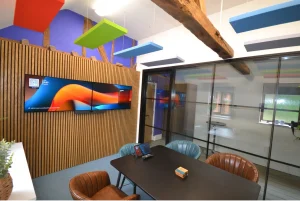
Framed glass partitioning has a different kind of impact. Rather than disappearing into the background, the frame becomes part of the design. It can be subtle and practical, or it can become a visual feature, especially when using black, bronze or steel framed systems.
For some workplaces, that definition is exactly what the design needs. A framed system can create contrast, mark out rooms and add permanence. It can also be useful for door systems, panel sizes, acoustic specification, blinds or manifestation.
Framed vs Frameless Glass Partitions: Which Is Better?
As you might have imagined, there is no single better choice between the two. The best system depends on what you need the space to do. Before we recommend a direction, we look at the practical demands of the workplace, how people move through the building and the kind of impression the client wants to create.
A useful way to think about it is:
- Choose frameless glass if you want the lightest, cleanest and most open finish.
- Choose framed glass if you want more definition, contrast or a stronger visual feature.
- Review acoustic performance early, especially for meeting rooms.
- Think about how glass doors will operate, including swing, sliding and access requirements.
- Consider manifestation or privacy films so the glass is safe and suited to daily use.
Acoustic performance is worth discussing properly. Door seals, ceiling junctions, flooring, wall connections and build quality all influence how the room performs once it is in use.
How the Right Glass Partitioning Improves Office Space
Good partitioning changes how people experience the workplace. A glazed meeting room can make a floorplate feel more open. A framed office can give leadership teams privacy without looking closed off. Glass panels can also help visitors understand the layout without needing signage everywhere.
We look at how the space is used, where privacy is needed, where light should be protected and where the finished interior can support the company’s brand.
Choosing the Right Finish With Our Expertise
The difference between framed and frameless glass is not simply cosmetic. It affects light, privacy, acoustics, movement, maintenance and the overall atmosphere of the space. Done well, both options can lift a commercial interior and make it feel more professional.
Our advice is to start with the purpose of the room, then work back to the finish. If the space needs to feel open and elegant, frameless glass partitions are often the natural choice. If it needs more edge, contrast or visual structure, framed glass partitioning may be the better fit.
With the right planning, detailing and installation, glass partitioning can turn an ordinary office layout into a brighter, smarter and more usable workplace.
If you liked this, you will also like: Acoustic Partitions – Blocking Sound in Open Plan Office Spaces
Frequently Asked Questions About Framed vs Frameless Glass Partitions
What Are Frameless Glass Partitions?
Frameless glass partitions are internal glass walls that use minimal visible framing to divide a workplace while keeping the space bright and open. They are commonly used for meeting rooms, private offices, reception areas and glazed walkways where businesses want separation without making the office feel enclosed.
Are Frameless Glass Partitions Better Than Framed Glass Partitioning?
Frameless glass partitions are better if you want a clean, modern and open look. Framed glass partitioning may be better if you want stronger visual definition, an industrial style or more design contrast. The best choice depends on how the space will be used, how much privacy is needed and the overall look you want to create.
Do Frameless Glass Partitions Help With Noise?
Frameless glass partitions can help reduce noise when they are specified and installed correctly, but acoustic performance depends on the full system. Glass thickness, door seals, junctions, ceiling details and surrounding surfaces all affect how well sound is controlled.
Can Glass Partitions Be Used for Meeting Rooms?
Yes, glass partitions work very well for meeting rooms because they create a separate, usable space without cutting off light or visibility. For meeting rooms where confidential conversations happen, we would usually look closely at acoustic performance, door seals, privacy manifestation and blinds.
Are Frameless Glass Partitions Safe in Offices?
Yes, when properly specified and installed, frameless glass partitions are safe for commercial office environments. Safety glass, correct fixing methods and visible manifestation are important, especially where large glass panels are used in areas with regular foot traffic.
What Is the Main Difference Between Framed and Frameless Glass Partitions?
The main difference is appearance and structure. Frameless glass partitions have a minimal, seamless look with very little visible framing, while framed glass partitioning uses visible frames to create more definition, contrast and design character.
Can Frameless Glass Partitions Include Glass Doors?
Yes, frameless glass partitions can include glass doors, including hinged and sliding options depending on the space. Door choice is important because it affects access, privacy, acoustic performance and how the room feels in everyday use.
Is Framed Glass Partitioning More Suitable for Industrial Office Design?
Framed glass partitioning is often a strong choice for industrial-style offices, especially when using black or steel framed systems. It gives the glass more structure and can create a more architectural look while still allowing light to move through the office space.
Do Glass Office Partitions Make a Space Feel Bigger?
Glass office partitions can make a space feel bigger because they allow natural light and sightlines to continue through the layout. They are particularly useful in offices where teams need separate rooms but the business does not want the workplace to feel dark, boxed in or disconnected.
How Do I Choose Between Framed and Frameless Glass Partitions?
Start with the purpose of the space. If you want the most open, minimal and light-filled finish, frameless glass partitions are usually the stronger choice. If you want more visual definition, contrast or a statement feature, framed glass partitioning may suit the design better. We would also consider acoustics, privacy, doors, safety requirements and how the space needs to work every day.