
Reliable Emergency Lighting For 2026
Emergency lighting is one of those details that should be planned early, not treated as an afterthought once the ceiling is already in place. In a modern commercial fit out, it has to support safety, compliance, visibility and the overall look of the space. When we design or refurbish commercial interiors, we look at how emergency lighting works alongside normal lighting, suspended ceiling lights, access routes, partitions, doors, signage and the day-to-day use of the building.
Quick Summary
Emergency lighting helps people move safely through a building if the normal lighting supply fails. For offices, receptions, corridors, washrooms, meeting suites and wider commercial spaces, it should be considered as part of the full interior layout, not simply added at the end. A good system takes account of escape routes, fire safety duties, ceiling design, light levels, maintenance access and the visual finish of the space.
Why Emergency Lighting Matters in Commercial Spaces
Emergency lighting is there for the moment nobody wants, but every commercial space must be ready for. If the mains lighting fails during a power cut, fire event or electrical fault, people still need to see where they are going, identify exits and move safely away from risk.
In the UK, BS 5266-1:2025 is the current code of practice for emergency lighting of premises. It provides recommendations and guidance on the design, installation and wiring of emergency lighting systems for situations where the normal lighting supply fails.
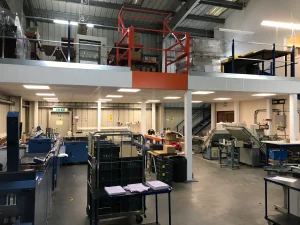
That matters because every workplace is different. A small office suite, a warehouse mezzanine, a reception area, a corridor-heavy fit out and a mixed-use commercial unit all have different movement patterns. The right system design should reflect how people actually use the building, not just where fittings can be placed most easily.
Where Emergency Lighting Should be Considered
Emergency lighting is usually needed where people may need artificial light to escape safely. HSE guidance for site lighting gives the practical principle clearly: where emergency routes need artificial light, emergency lighting should come on if the primary lighting fails.
In a commercial interior, that can include:
- Corridors, staircases and escape routes
- Changes in floor level or direction
- Open-plan office routes leading to exits
- Reception and waiting areas
- Meeting rooms and enclosed offices
- Washrooms and internal rooms
- Plant rooms, storage areas and back-of-house spaces
- Areas around fire alarm call points, fire equipment and final exits
The important point is not simply “where can we put the light?” It is “where would somebody need visibility if the building suddenly went dark?”
How Suspended Ceiling Lights Affect the Design
Suspended ceiling lights are common in offices and commercial interiors because they create a clean finish, improve layout consistency and allow services to be integrated neatly above the ceiling grid. However, the ceiling plan has to be coordinated carefully.
Emergency lighting should work with the ceiling, not fight against it. When we plan suspended ceilings, we consider the position of normal light fittings, air conditioning grilles, access panels, fire detectors, sprinklers, speakers and emergency fittings together. This helps avoid cluttered ceilings and awkward last-minute changes.
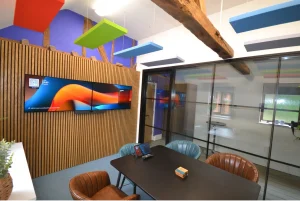
A well-planned layout can also make emergency lighting feel less visually intrusive. In many offices, LED ceiling fittings, recessed emergency units and integrated signs can sit comfortably within the wider design. The goal is to keep the space looking considered while still meeting the safety purpose.

Emergency Lighting and Interior Fit Out Planning
Emergency lighting should be reviewed whenever a commercial space is altered. Moving walls, adding glass partitions, creating new meeting rooms, changing a reception layout or installing a mezzanine can all affect escape routes and visibility.
A practical process usually looks like this:
- Review the existing layout, use of space and escape routes.
- Identify areas where visibility is needed during a lighting failure.
- Coordinate emergency lighting with suspended ceiling lights and other ceiling services.
- Check that signage, exits and route changes remain clear.
- Allow for testing, maintenance and future access.
- Confirm the installation aligns with the wider fire strategy and competent electrical design.
Under the Regulatory Reform (Fire Safety) Order 2005, fire safety duties apply to non-domestic premises, and the responsible person must manage fire safety arrangements for the premises. For business owners and facilities teams, that makes emergency lighting more than a design preference. It is part of keeping the building safe and usable.
Balancing Safety, Design and Energy Efficiency
Modern emergency lighting does not need to make a space look clinical or over-engineered. With careful coordination, fittings can be practical, discreet and aligned with the wider interior style.
Energy efficiency is also worth considering. LED panel and LED ceiling options are now widely used in commercial interiors because they can provide efficient everyday lighting while supporting a clean, modern appearance. Emergency lighting should be considered alongside that wider lighting specification, particularly where fittings, controls and ceiling grids need to work together.
What Makes a Good Emergency Lighting Layout?
A good layout is not just technically correct. It should feel natural within the building. People should be able to understand the route, see important changes in direction and identify exits without confusion.
Common Design Mistakes to Avoid
One of the biggest mistakes is leaving emergency lighting until the end of the project. By that stage, ceiling grids, partition lines, mechanical services and decorative lighting may already be fixed.
Why Early Coordination Saves Problems
Early coordination gives the project team more control. It helps prevent emergency fittings from being squeezed into awkward locations, avoids conflicts with other ceiling services and reduces the risk of compromising the finished look. It also makes it easier to plan access for future testing and maintenance.
Approved Document B provides fire safety guidance for buildings in England, including means of warning and escape, so commercial interiors should always be considered in the context of wider fire safety requirements rather than treated as isolated design decisions.
How We Approach Emergency Lighting in Commercial Interiors
Our approach is to look at the full space first. We consider how people enter, move, work, meet, wait and leave. From there, emergency lighting can be integrated into the ceiling and interior design in a way that feels intentional.
For offices, this might mean coordinating emergency fittings with suspended ceiling lights and glass partition lines. For receptions, it may mean keeping the ceiling clean while ensuring exits and routes remain clear. For commercial spaces with storage, mezzanines or back-of-house areas, it may mean making sure practical areas are not overlooked because they are less visible to visitors.
Emergency lighting is not the most glamorous part of an interior fit out, but it is one of the most important. Done properly, it supports compliance, protects people and preserves the quality of the finished space. That is exactly how good commercial design should work: practical, safe, well planned and visually considered.
If you liked this, you may also like: Suspended Ceilings & LED Panel Lights: 2025 Function & Design
Frequently Asked Questions About Emergency Lighting For Safer, Smarter Commercial Interiors
What is emergency lighting in a commercial building?
Emergency lighting is lighting that activates when the normal mains lighting fails. It helps people see escape routes, exits, stairs, corridors, fire equipment and changes in level so they can move safely through the building.
Where is emergency lighting needed in an office?
Emergency lighting is usually needed along escape routes, corridors, staircases, final exits, reception areas, internal rooms, washrooms, meeting rooms and anywhere people may need artificial light to leave safely if the main lighting fails.
Is emergency lighting a legal requirement for commercial spaces?
Most commercial spaces need suitable emergency lighting as part of their wider fire safety responsibilities. The exact requirements depend on the building layout, use, occupancy, escape routes and fire risk assessment.
How does emergency lighting work with suspended ceiling lights?
Emergency lighting should be planned alongside suspended ceiling lights so the ceiling layout stays clean, practical and compliant. This helps avoid cluttered fittings, awkward positioning and conflicts with air conditioning, fire alarms, access panels or other ceiling services.
Can emergency lighting be discreet in a modern office design?
Yes, emergency lighting can be discreet when it is planned early. Recessed fittings, integrated emergency units and carefully positioned signage can support safety without spoiling the look of a modern office or commercial interior.
What is the difference between emergency lighting and normal lighting?
Normal lighting is used every day to illuminate the workspace. Emergency lighting is a backup system designed to provide visibility if the normal power supply fails, especially along escape routes and key safety areas.
Should emergency lighting be considered during an office fit out?
Yes, emergency lighting should be considered during the early stages of an office fit out. Moving partitions, changing room layouts, adding meeting rooms or installing new suspended ceilings can all affect escape routes and lighting requirements.
Are LED ceiling lights suitable for emergency lighting systems?
LED ceiling lights are widely used in commercial interiors because they are efficient, neat and suitable for modern ceiling layouts. Emergency lighting can be designed alongside LED ceiling systems, although the emergency function needs to be specified properly for the space.
How often should emergency lighting be tested?
Emergency lighting should be tested regularly as part of the building’s fire safety and maintenance routine. The exact testing schedule should be managed by the responsible person for the premises and carried out in line with relevant guidance and competent advice.
Who should design emergency lighting for a commercial interior?
Emergency lighting should be designed by competent professionals who understand fire safety, electrical requirements, ceiling layouts and how people move through commercial spaces. We look at the full interior so the system supports safety, compliance and the finished design.