
How to Make The Most Out of a Vet Fit Out in 2026
A vet fit out and healthcare interior project has to work harder than a standard commercial refurbishment. The space needs to feel calm for owners, safe for animals, practical for staff and suitable for clinical work. For 2026 and beyond, strong veterinary design is about hygiene, movement, trust, animal care and a better experience from the moment someone walks through the door.
Quick Summary
A successful vet fit out balances clinical practicality with a welcoming atmosphere. Veterinary practices need durable finishes, easy-clean surfaces, sensible patient flow, calm waiting areas, well-planned consultation rooms and reception spaces that reassure clients. With our expertise in commercial interiors and healthcare environments, we help practices create interiors that feel professional, hygienic and comfortable to use.
Why a Vet Fit Out Needs a Different Approach
Veterinary practices are emotional places. Clients may arrive worried, animals may be nervous, and staff need to move between clinical, customer-facing and back-of-house spaces without disruption. This means the interior design has to do more than look good. It must make the practice easier to run.
The regulatory backdrop matters too. UK veterinary practice premises must comply with the law to operate, and premises that supply medicines must be registered. The RCVS Practice Standards Scheme also provides a framework for accreditation across areas such as premises, medicines, infection control and patient care.
For us, every design decision needs a practical reason behind it. Flooring, partitions, wall finishes, reception counters, lighting, storage and access routes all contribute to how smoothly the building performs.

What Should a Veterinary Clinic Interior Include?
A veterinary clinic needs a wide range of spaces, often within a limited footprint. The challenge is making each area feel purposeful without making the environment feel cramped, cold or overly clinical.
A strong layout should usually consider:
- A reception area that creates a calm and professional first impression.
- Waiting areas that reduce congestion and help separate nervous animals where possible.
- Consultation rooms with durable surfaces, good lighting and practical storage.
- Staff-only areas that support admin, preparation, cleaning, movement, and staff breaks.
- Clear circulation routes for clients, pets, staff and equipment.
We look at how people and animals move through the space, then shape the interior around that reality.
Hygiene, Durability and Cleaning Must Be Built In
Hygiene cannot be treated as an afterthought in veterinary practice design. The best spaces make cleaning easier by reducing awkward gaps, fragile surfaces and poorly protected edges. BSAVA guidance on consulting rooms covers room design, animal handling, biosecurity and waste disposal, showing how closely interior decisions connect with day-to-day clinical practice.
Designing Consultation Rooms That Work Properly
Consultation rooms are where client confidence and clinical practicality meet. A room that looks good but lacks storage, cleaning access or movement space will quickly become frustrating. A room that is practical but poorly lit can feel cold and uncomfortable.
Good design gives staff what they need within easy reach while keeping the room calm for the client and animal.
Small Details That Make the Room Easier to Use
Useful details can include integrated storage, washable wall protection, non-slip flooring, sensible door positions, clear worktop zones and lighting that supports examination without making the room feel severe.
Creating Waiting Areas That Feel Calm, Not Clinical
Waiting areas are often the most emotional part of a veterinary practice. Animals may be anxious, owners may be concerned and the reception team may be managing phones, walk-ins and appointments all at once.
A better waiting area can be created through:
- Clear sightlines to reception.
- Seating that avoids unnecessary crowding.
- Flooring that is easy to clean after accidents.
- Lighting that feels softer than a traditional clinical setting.
- Colours and finishes that feel reassuring rather than sterile.
The space still needs to perform like a clinical environment, but it should not feel intimidating.
Receptions Should Sell Trust Before Anything Else
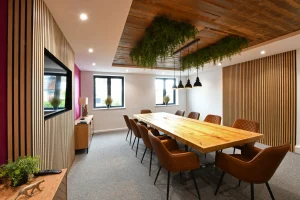
For many clients, the reception is the first real measure of the practice. A well-planned reception should feel open, professional and easy to understand. It should support privacy where needed, help staff manage enquiries and create a clear first impression. Sometimes the strongest reception fit outs are simple, warm and beautifully organised.
A Better Interior Supports a Better Practice
We approach a vet fit out by looking at the client experience, staff workflow and practical demands of animal care. A small independent clinic, a growing veterinary practice and a larger multi-room site will all need different approaches.
A strong vet fit out should make the whole practice feel easier to use. Clients should feel reassured, staff should feel supported and animals should move through the space with less stress. Hygiene should be easier to maintain, not harder.
With our expertise in commercial interiors, healthcare environments and practical interior design, we help veterinary practices create spaces that are clean, durable, welcoming and ready for the way modern animal care works in 2026.
If you liked this, you may also like: Office Reception Ideas For 2026 And Beyond
Frequently Asked Questions About Vet Fit Outs
What Is a Vet Fit Out?
A vet fit out is the process of designing, building and finishing the interior of a veterinary practice so it works for clinical care, staff workflow, hygiene, clients and animals. It can include receptions, waiting areas, consultation rooms, treatment spaces, storage, partitions, flooring, lighting and finishes.
What Should Be Included in a Veterinary Practice Fit Out?
A veterinary practice fit out should usually include a welcoming reception, practical waiting areas, well-planned consultation rooms, hygienic finishes, clear staff routes, storage, durable flooring and suitable lighting. The exact layout depends on the size of the practice, the services offered and how the team works day to day.
How Do You Design a Vet Reception Area?
A vet reception area should feel calm, clear and professional. It needs to include a practical desk area for staff, easy-to-follow client flow, durable finishes, visible signage and enough space to prevent the entrance from feeling crowded. The aim is to make owners feel reassured from the moment they arrive.
Why Is Hygiene So Important in a Vet Fit Out?
Hygiene is essential because veterinary practices deal with animals, clinical procedures, waste, fluids and high footfall. A good vet fit out should include easy-clean surfaces, durable wall protection, suitable flooring and layouts that reduce awkward corners or hard-to-clean areas.
What Flooring Is Best for a Veterinary Clinic?
The best flooring for a veterinary clinic is usually durable, slip-resistant, easy to clean and suitable for heavy daily use. It should cope with pets, staff movement, cleaning products and occasional accidents, while still looking appropriate for a professional healthcare interior.
How Can Waiting Areas Be Made Calmer for Pets?
Waiting areas can be made calmer through better spacing, softer lighting, clear movement routes, comfortable seating and finishes that feel less harsh than a purely clinical space. Where possible, layouts can also help reduce direct contact between nervous animals.
What Makes a Good Veterinary Consultation Room?
A good veterinary consultation room should be practical, cleanable and comfortable to use. It needs enough space for the vet, client and animal, along with good lighting, worktop space, storage, washable surfaces and a layout that supports safe handling.
Can a Vet Fit Out Improve Staff Workflow?
Yes, a well-planned vet fit out can improve staff workflow by reducing unnecessary movement, improving storage, creating clearer routes and making each room easier to use. This can help the team work more efficiently during busy appointments and daily clinical tasks.
How Do You Make a Vet Practice Feel Welcoming Without Losing the Clinical Feel?
A vet practice can feel welcoming by using warm but practical finishes, calm colours, good lighting, clear signage and a reception layout that feels organised. The space still needs to meet clinical and hygiene needs, but it does not have to feel cold or intimidating.
When Should a Veterinary Practice Consider a New Fit Out?
A veterinary practice should consider a new fit out when the layout no longer supports the team, the interior feels dated, hygiene is harder to manage, consultation rooms feel cramped or the client experience no longer reflects the quality of care being provided.