
Acoustic partitioning has become one of the smartest ways to make a workplace feel calmer, more focused and far more considered. In a modern hybrid office working space, people are not coming in just to sit quietly at a desk all day. They are joining calls, collaborating in person, needing privacy for certain conversations and wanting an office that feels worth the commute. That means the layout has to work harder than it used to. The strongest offices now offer a better mix of spaces, and better control over noise, rather than relying on one large open room to do everything.
Quick Summary
Acoustic partitioning helps modern offices create quieter zones, more private meeting areas and a better overall flow without losing openness. In a hybrid office working space, this especially matters because people use the office in different ways throughout the day. The right partitioning can reduce distractions, improve comfort, support confidential conversations and make the whole workplace feel more polished, purposeful and easier to use.
Why Acoustic Partitioning Matters More in Modern Offices
The biggest problem with many older office layouts is not that they are too open or too enclosed. It is that they ask one space to do too many jobs at once. A sales call happens next to focused admin work. A team catch-up starts beside a video meeting. Someone needs concentration while someone else needs momentum and conversation.
That is where acoustic partitioning comes into its own.
Rather than breaking up a space for the sake of it, acoustic partitioning introduces control. It helps reduce sound transfer between zones, softens the overall noise level and creates defined areas for different activities. That matters because workplace research continues to show that noise dissatisfaction remains one of the weakest parts of office experience, and that poor noise control can drag down both productivity and wellbeing.
A well-planned office should feel like it understands how people actually work. Not every team needs silence. Not every moment needs collaboration. Good partitioning helps create the balance.
Where Acoustic Partitioning Adds the Most Value
Meeting Rooms and Collaboration Areas
Meeting spaces are often where noise starts to travel. That is especially true in offices where informal collaboration is encouraged, but the surrounding team still needs to get on with individual work.
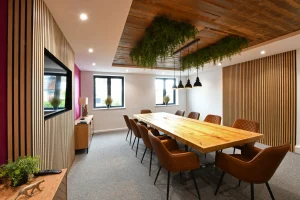
Acoustic partitioning helps by creating proper boundaries around those louder zones. That might mean glazed partitions with stronger acoustic performance, enclosed rooms for scheduled meetings, or smaller breakout areas that absorb sound rather than throwing it back into the office. The point is not to stop collaboration. It is to give it the right setting.

Quiet Zones and Touchdown Spaces
In a hybrid office working space, for example, not everybody arrives with the same task list. Some people come in for team energy. Others come in because they need a better environment for focused work than they have at home.
Quiet zones, touchdown areas and small private booths all become far more effective when acoustic partitioning is part of the design. These spaces feel intentional rather than improvised, and staff do not need to hunt for somewhere peaceful every time they need to think clearly or take a sensitive call.
Private Offices Without a Heavy Feel
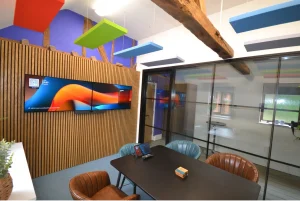
Privacy still matters, but very few businesses want an office to feel dark or boxed in. This is why acoustic glass partitions are such a strong option. They allow light to move through the space, keep teams visually connected and still improve sound control where it matters most.
How to Make Acoustic Partitioning Feel Like Part of the Design
Balance Performance With Atmosphere
The best results come when acoustic partitioning is treated as part of the overall fit out, not as a late fix for a noisy office.
A strong scheme usually includes:
- quieter zones for focused work
- meeting rooms with better speech privacy
- materials that absorb rather than reflect sound
- layouts that support movement without creating constant interruption
The Details That Stop a Space Feeling Boxed In
This is often where the quality of the design shows. The most successful offices do not just divide space, they instead aim to shape the experience of it from top to bottom:
- Use glazing where openness and visibility still matter.
- Position enclosed areas around the noisiest functions first.
- Combine acoustic performance with branding, finishes and light flow.
- Leave enough flexibility for the layout to evolve as the business changes.
That last point matters more than ever. Hybrid working patterns have pushed office design towards a wider mix of spaces, with less emphasis on rows of desks and more emphasis on variety, wellbeing and experience.
For us at SSC Interiors, that is often where the real opportunity sits. Acoustic partitioning should not feel like a compromise, it should feel like part of a bigger vision for how the office can look, sound and function.

Check out the website
https://gatwick.freedomworks.space/en
Photo: Martin Bloomfield / Seaside Creative Ltd
Acoustic Partitioning as Part of a Better Office
Acoustic partitioning is not just about combating noise. It is about making the office more useful, more comfortable and more aligned with the way people work now. When done properly, it creates quieter workspaces, supports collaboration, improves confidentiality and helps open-plan offices feel more refined.
In other words, it helps turn one broad space into a workplace with purpose.
For businesses rethinking their layout, refreshing an existing floorplate or planning a wider fit out, acoustic partitioning can be one of the clearest ways to create an office that feels better the moment you walk into it. And in a hybrid office working space, that feeling matters.
If you enjoyed this, you may also like: Acoustic Wall Panels: What They Are and Why They Matter
Frequently Asked Questions About Acoustic Partitioning That Helps Your Office Work Better
What is acoustic partitioning in an office?
Acoustic partitioning is a way of dividing up office space while helping to reduce noise transfer between different areas. It can include glazed partitions, solid walls, acoustic screens or booths, all designed to create a more comfortable and practical working environment.
How does acoustic partitioning help with noise in an open-plan office?
It helps by reducing the amount of sound that travels across the office. That means fewer distractions from meetings, phone calls and general movement, which can make it much easier for people to concentrate and work comfortably.
Is acoustic partitioning a good idea for hybrid offices?
Yes, because hybrid offices usually need to support a wider mix of activities. On any given day, some people may need quiet focus space, while others need room for collaboration, calls or meetings. Acoustic partitioning helps create those different zones without losing the overall openness of the office.
Can acoustic glass partitions still reduce noise?
Yes, they can. Acoustic glass partitions are designed to improve sound control while still letting light move through the space. They are a popular choice for businesses that want more privacy and better noise management without making the office feel closed off.
What is the difference between standard partitioning and acoustic partitioning?
Standard partitioning mainly divides space visually or physically. Acoustic partitioning is designed with sound control in mind, so it helps reduce noise transfer as well as defining different areas of the office.
Where should acoustic partitioning be used in an office?
It works particularly well around meeting rooms, private offices, call areas, breakout spaces and quiet zones. These are usually the parts of an office where sound control has the biggest impact on comfort and productivity.
Does acoustic partitioning make an office feel smaller?
Not necessarily. When it is planned properly, it can actually make an office feel more organised and easier to use. Options like glazed partitioning can keep the space feeling open and bright while still improving privacy and reducing noise.
Can acoustic partitioning improve employee wellbeing?
It can certainly help. A noisy office can be tiring and distracting, especially for people who need to focus for long periods. Giving staff access to quieter, better-defined areas can make the office feel calmer, more supportive and more pleasant to work in.
Is acoustic partitioning only useful for large offices?
No, it can be valuable in smaller offices as well. In fact, when space is limited, it becomes even more important to make sure different activities do not clash. Acoustic partitioning can help a smaller office work much harder without needing a complete redesign.
How do I know if my office needs acoustic partitioning?
If your team struggles with noise, lack of privacy, meeting disruption or difficulty concentrating, acoustic partitioning is worth considering. It is especially useful if your current layout feels like one open space is being asked to do too many different jobs at once.