When optimising your workplace, creating more usable floor space often tops the list. But what if extending your premises isn’t an option? That’s where mezzanine floor systems come in as versatile, cost-effective, and surprisingly fast to install.
At Sussex & Surrey Commercial Interiors (formerly known as Sussex & Surrey Partitioning), we recognise the challenges many businesses face, particularly those operating from industrial units in the Sussex countryside. Whether you’re managing a dusty warehouse, a noisy production floor, or a remote distribution hub, your team still needs a comfortable place to take breaks, recharge, and interact.
This year, Mental Health Awareness Week ran from 12th to 18th May. This year’s theme, “Community,” reinforces the value of shared environments and the importance of space.
What better way to support that ethos than by providing areas your team can use to recharge during allocated breaks?
In this blog, we discuss why installing mezzanine floors is transformative for staff comfort, welfare and workplace efficiency.
Why Mezzanine Floor Systems are Ideal Spaces for Your Staff
1. A Dedicated Staff Breakout Space
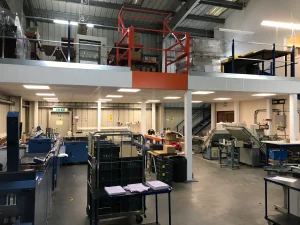
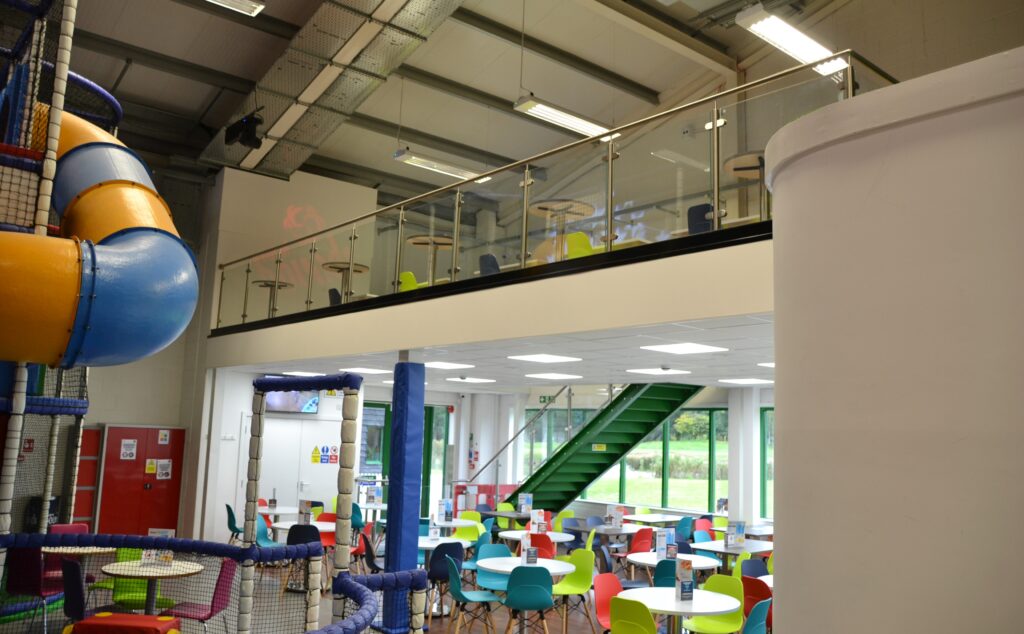
A free-standing mezzanine offers a straightforward way to create areas for your staff without needing additional buildings or relocations. In harsh or dusty work environments like warehouses or production sites, having a clean, elevated spot for breaks is a practical solution.
This additional space lets employees remove themselves from the noise and grime of their daily operations, even just for 15 minutes. As well as having a clean space to eat their lunch away from dust or noisy machinery. Happy staff equals a happy work environment.
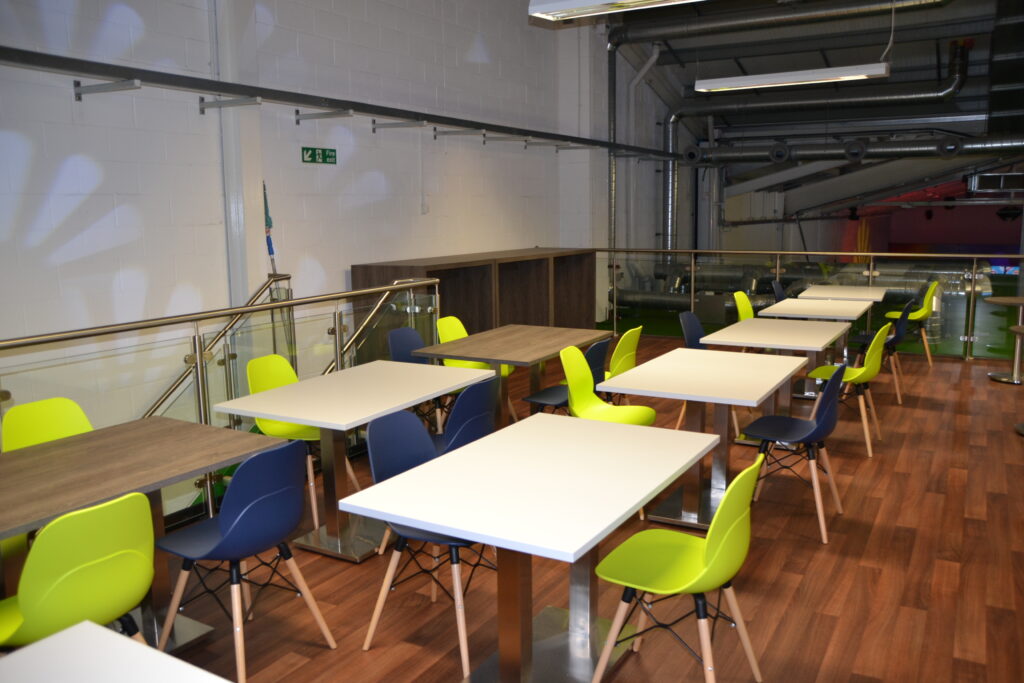
2. Create a Kitchen or Lunch Area
Whether it’s a quick cuppa or a full lunch break, everyone benefits from a place to eat that isn’t their desk or a stack of pallets. A mezzanine floor system can be custom-designed to include a kitchen area complete with seating, appliances, and storage.
In remote rural warehouse unit locations, like many found across Sussex and Surrey, this is a vital upgrade, cutting down on the need for long journeys to local shops or cafes, especially where limited break time is a factor.
3. Host Clients and Guests
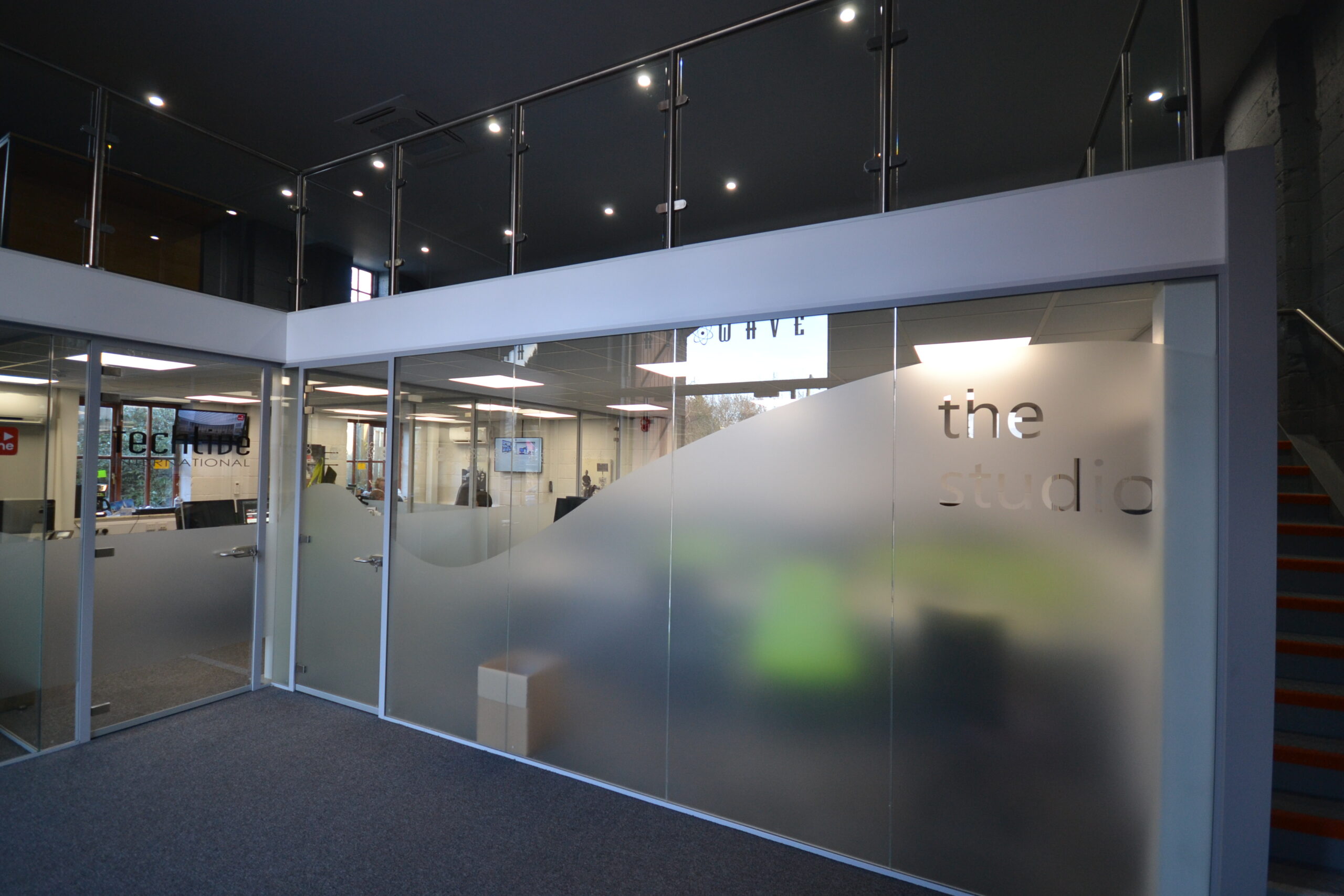
A functional, well-presented space on a mezzanine level is ideal for hosting visitors. It adds a layer of professionalism, separating customer-facing areas from your day-to-day operations. This could include a meeting room, waiting lounge, or even a dedicated showroom.
You can even opt for fire protection systems and building regulation approval to ensure the space is safe and compliant for public use.
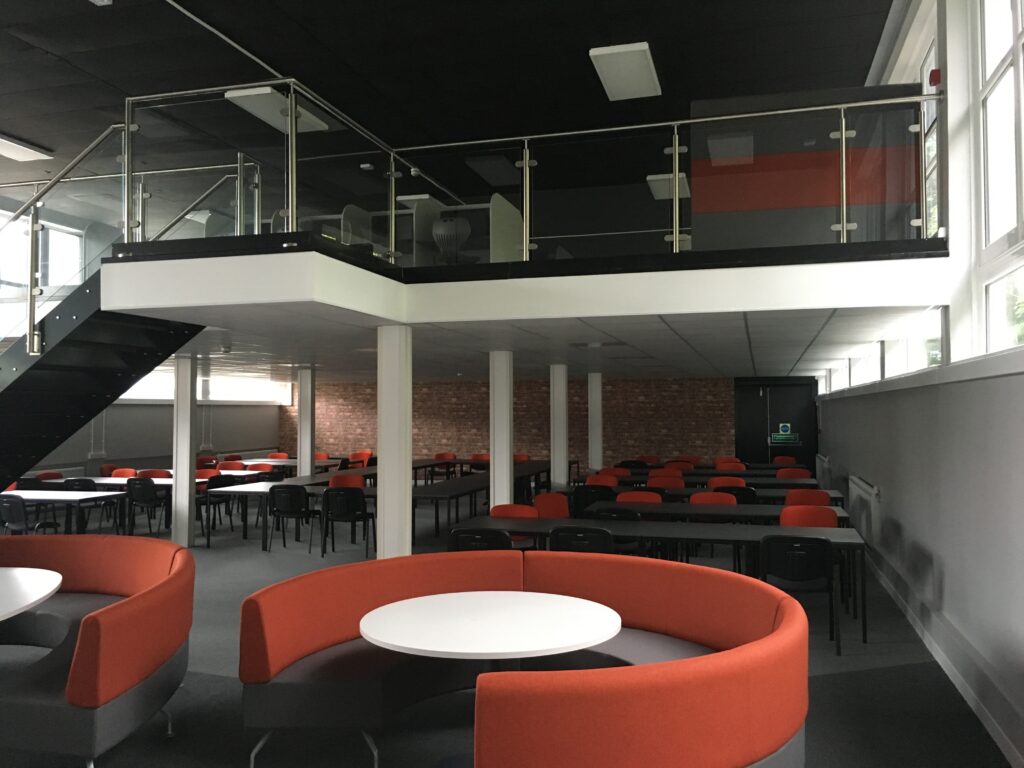
4. Team Meeting Rooms and Collaboration Areas
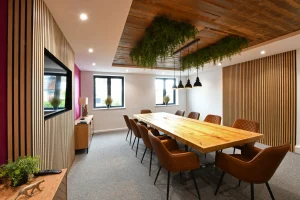
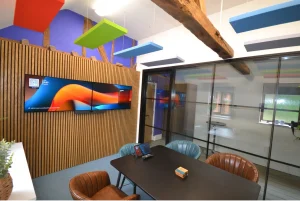
Need a quiet corner for brainstorming or a team catch-up? Mezzanine floor construction can be adapted to include office spaces and enclosed meeting rooms. This enables staff collaboration while preserving open-plan floor layouts below for operational efficiency.
Our mezzanine floor design options can include soundproofing, climate control, and smart lighting systems, ensuring comfort and privacy.
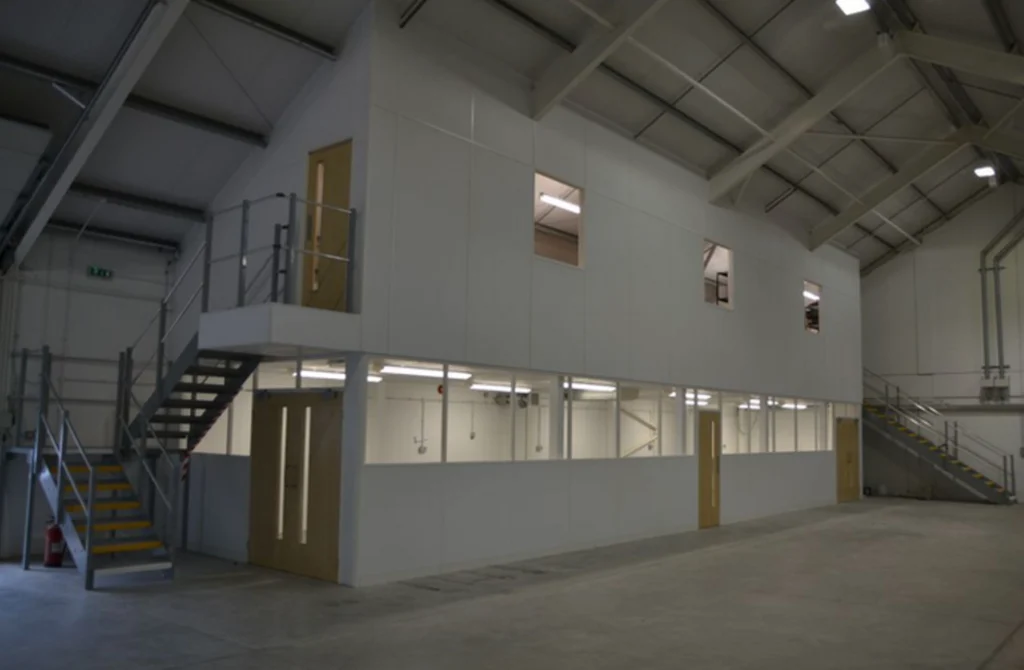
5. Boost Staff Morale in Industrial Environments
If your employees work in warehouse mezzanine settings or other industrial conditions, giving them a clean, organised retreat as additional space to decompress makes a real difference. It shows that as an employer, you care, and encourages a community culture, boosting staff morale and team building.
6. Flexible and Free-Standing Construction
One of the biggest perks of mezzanine floor systems is that they’re free-standing and don’t interfere with the main structure of your building. That means faster installation, fewer permits, and simpler building regulations.
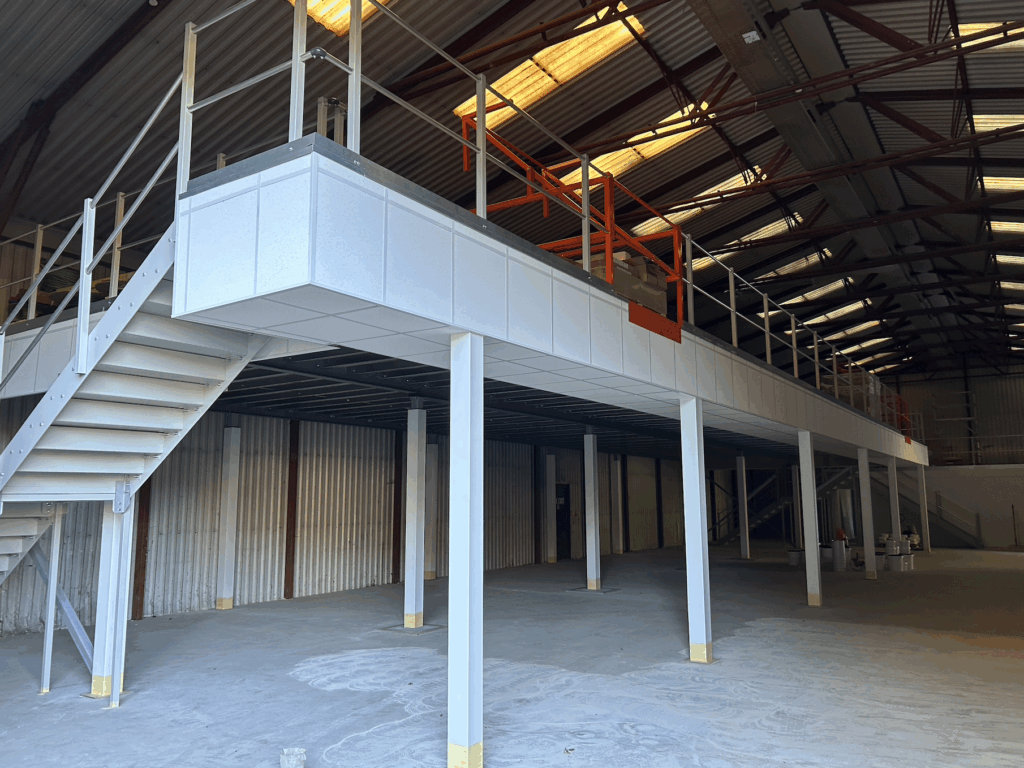
7. Ideal Use of Vertical Space
When you’re limited on floor area, why not build up? Mezzanines are an effective solution for maximising vertical space, turning unused airspace into productive zones. That’s especially important in industrial or commercial units where every square metre counts.
An Effective, Cost-Effective Solution
Compared to building extensions or moving sites, a mezzanine floor installation is a far more cost-effective way to gain additional storage or staff space. And with proper planning, you can have your floor system up and running in a matter of weeks.
At Sussex & Surrey Commercial Interiors (formerly known as Sussex & Surrey Partitioning), we’ve helped businesses across the region unlock the full potential of their premises. You can see more about this in our related blogs:
- Maximise Your Warehouse Space with a Mezzanine Floor
- Stuck for Office Space? Consider an Office Mezzanine Floor
- Mezzanine Floor Installation in Sussex
Need a Trusted Mezzanine Floor Systems Installer Near You?
As a Sussex-based company, we’re ideally located for businesses across Sussex and Surrey looking for local, reliable mezzanine installers near me. Whether you need one floor or a multi-level range of applications, our team handles every stage, from planning and design to mezzanine floor installation and final sign-off.
? Explore our mezzanine services or contact us on 01444 220525 to discuss your mezzanine floor systems project.
Enjoyed this read? Why not read our mezzanine flooring faqs blog?
FAQs
1. Do mezzanine floors require building regulation approval?
Yes, any mezzanine floor construction intended for people (like break rooms or offices) must meet building regulation approval for safety, fire protection, and structural integrity.
2. How long does a mezzanine installation take?
Most projects take between 2–6 weeks from design to completion, depending on size and complexity.
3. Can mezzanine floors be removed or reconfigured?
Absolutely. Many mezzanine floor systems are free-standing, meaning they can be taken down or modified as your business evolves.
4. Is a mezzanine floor suitable for heavy use or industrial equipment?
Yes, we design floors to handle a wide range of applications, including heavy machinery or high foot traffic. The floor is designed to suit your specific needs.
5. What’s the difference between mezzanine storage and staff spaces?
Additional storage mezzanines focus on shelving and inventory, while staff spaces are designed for comfort, access, and utility, often including kitchen areas, meeting rooms, and breakout zones.